
Exosomes in Skincare: Why They Work Differently Than Other Ingredients
If you've been paying attention to skincare lately, you've probably heard about exosomes. They're showing up everywhere, from high-end facial studios to dermatology offices, and the buzz isn't slowing down. We've been using them for over a year with excellent results, so we wanted to share why we believe they're genuinely different.
What we want you to understand is this: exosomes aren't just another trending ingredient. They represent a fundamentally different approach to how we treat and support the skin.
You know us, we don't jump on trends simply because they're popular. We integrate new technologies when they're backed by real science and deliver results we can see and measure.
What are exosomes and how do they actually work?
Most skincare ingredients work on the skin's surface or penetrate into the upper layers to deliver specific benefits. Hyaluronic acid hydrates. Vitamin C brightens and protects. Retinol speeds up cell turnover. These ingredients are valuable, but they work from the outside in, targeting individual functions.
Exosomes work completely differently.
They're tiny biological messengers, nano-sized vesicles that your cells naturally produce and use to communicate with one another. Think of them as little messengers that carry instructions about what cells should do, when to activate certain functions, and how to respond to stress or damage.
How do exosomes communicate with your skin cells?
Our skin is amazing, it constantly communicating with itself, sending signals about when to produce collagen, how to regulate inflammation, when to repair damage, and how to maintain the barrier.
When skin is young and functioning optimally, this communication system works seamlessly. Over time, or when skin becomes stressed or damaged, these signals weaken and become disrupted. Cells don't communicate as efficiently, which leads to slower healing, reduced collagen production, increased inflammation, and a compromised skin barrier.
Exosomes help strengthen and support this communication system. When applied correctly, they integrate with skin cells and deliver concentrated instructions carrying growth factors, proteins, lipids, and genetic material that encourage repair, calm inflammation, and support collagen production.
Rather than forcing the skin to react, exosomes work by supporting the skin's own biological processes at a cellular level. That's why they function differently than traditional skincare ingredients.
Related: What Are Exosomes? Their Use in Skin Treatments
Why does the source of exosomes matter?
Not all exosomes are created equal, and this is something we take very seriously at JE'DERM. The source of exosomes directly impacts their potency, safety, and effectiveness.
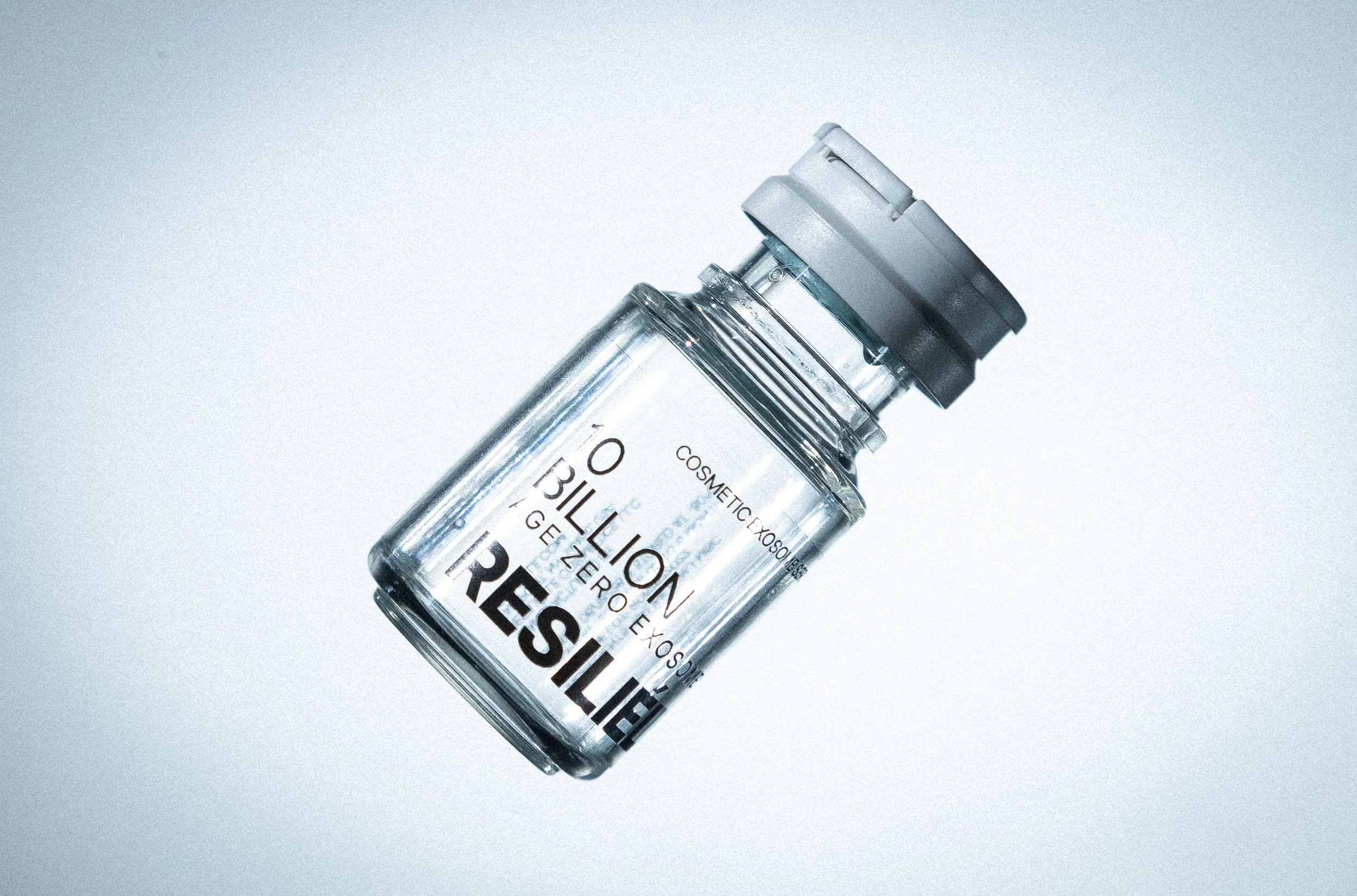
Age Zero Wharton Jelly Exosomes
Exosomes can be derived from several sources, including plants, adipose tissue, bone marrow, and umbilical cord tissue. For regenerative skin treatments, the gold standard is Wharton's Jelly, the connective tissue found in the umbilical cord.
What makes Wharton's Jelly exosomes superior?
Wharton's Jelly is rich in mesenchymal stem cells with powerful regenerative properties. Exosomes derived from these cells are particularly potent because they're packed with signaling molecules designed to support repair and regeneration.
They're also immune-privileged, meaning they carry a very low risk of adverse reactions, making them both safe and effective for skin treatments. Research shows that Wharton's Jelly exosomes promote better cell growth and migration compared to other sources, making them especially effective for skin regeneration and healing.
Why we chose Resilielle Age Zero exosomes
We partnered with Resilielle because their exosomes represent an exceptionally high standard of quality. A major differentiator is their low-passage process.
When stem cells are cultivated in a lab, they’re transferred multiple times. Each passage reduces the cells’ potency and regenerative capacity. Many exosome products use cells that have been passaged 10 to 20 times, which significantly weakens their effectiveness. Unfortunately, most companies do not disclose how many times their cells have been passaged.
Resilielle limits passaging to a maximum of four times, preserving the cells' original regenerative properties. The result is what they call Age Zero exosomes, maintaining the same biological potency as when first harvested and validated at Harvard Labs for purity and strength.
How do we deliver exosomes effectively?
For optimal results, exosomes work best when paired with treatments that enhance penetration. While they can offer benefits when applied topically during facials or after dermaplaning, the most transformative results come from pairing them with technologies that create controlled pathways into the skin.
CoolJet Plasma with Exosomes
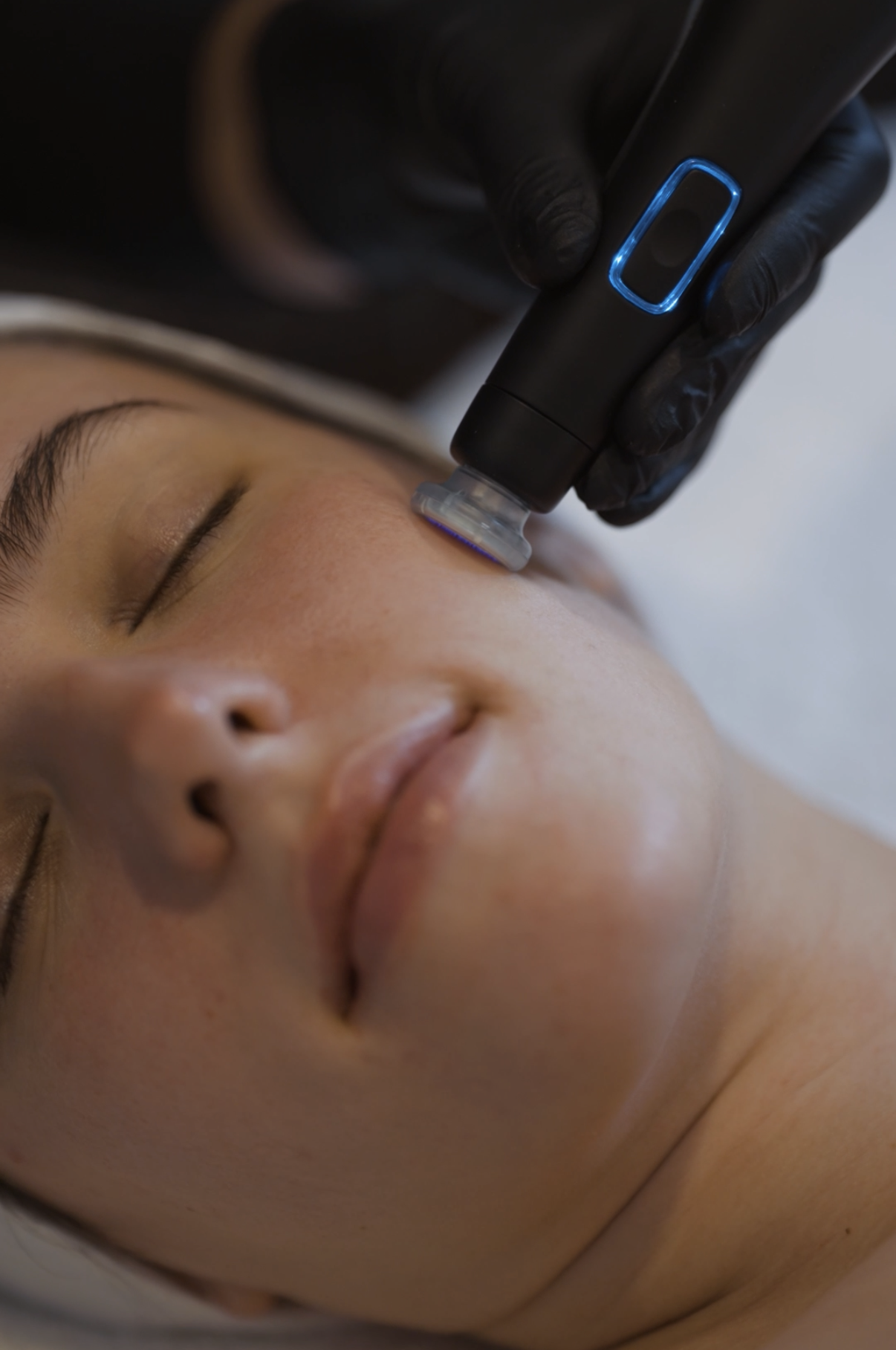
At JE'DERM, we primarily use exosomes with our CoolJet Plasma treatment. CoolJet uses cold plasma technology to create temporary microchannels in the skin without causing damage, significantly increasing skin permeability and allowing exosomes to reach deeper layers where cellular communication happens.
CoolJet activates the skin’s natural regenerative response, and exosomes enhance that process for more complete results. For clients looking to improve texture, tone, fine lines, or overall skin quality, we typically recommend a series of three to six treatments.
Read more: Cool Jet Plasma Treatment: A Breakthrough in Skin Rejuvenation and Tightening
Adding exosomes to other treatments
Exosomes can also be added to our Signature Bespoke Facial or applied after dermaplaning. These treatments create a more receptive environment through professional exfoliation and increased absorption, and clients experience meaningful benefits in hydration, texture, and overall skin quality.
Related reading: Dermaplaning: The Secret to Softer and Smoother Skin
What results can you realistically expect?
This is where we want to be clear about what exosomes can and can't do. They're not instant, and they're not a surface-level fix. They work best when used consistently as part of a broader approach to skin health.
Exosomes support the skin's natural repair and regeneration processes. They encourage collagen production, help regulate inflammation, support barrier function, and accelerate healing after treatments. Rather than masking symptoms, they address skin concerns at a foundational level.
Most clients notice improvements in texture and overall skin quality within a few weeks. ( after a series of treatments) Deeper changes, such as collagen remodeling and improved firmness, develop gradually over several months.
How do exosomes compare to other advanced treatments?
Many of our clients ask how exosome therapy compares to other advanced treatments they've heard about or tried. The key difference is mechanism of action.
Traditional treatments like chemical peels work by removing the outer layer of skin to reveal fresher cells underneath. LED therapy or microcurrent stimulate specific cellular responses and muscles through light or electrical energy. Exosomes work by delivering biological instructions directly to your cells, essentially helping your skin remember how to function optimally.
Related: The Ultimate Anti-Aging Facial Treatments You Need to Try
Who benefits most from exosome treatments?
Exosomes are suitable for most skin types and especially beneficial for skin affected by sun damage, environmental stress, or chronic inflammation. They are an excellent option for anyone interested in skin longevity and a preventative, long term approach to skin health, supporting function now to help maintain resilience over time.
Experience exosome therapy at JE'DERM skin atelier
Exosomes represent a different approach to skincare, one that works with the skin's natural biology rather than simply applying ingredients on the surface. At JE'DERM skin atelier, we focus on treatments that deliver real, measurable results.
Whether you're interested in CoolJet Plasma with Exosomes for deeper cellular support, or adding exosomes to your Signature Bespoke Facial, we'll create a plan that makes sense for your skin and your goals.
Book a consultation and let's explore how exosomes can support your skin's health and longevity.